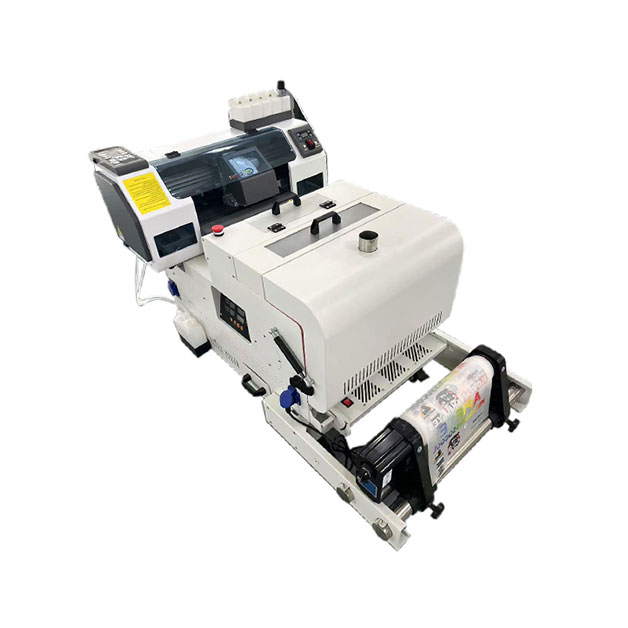
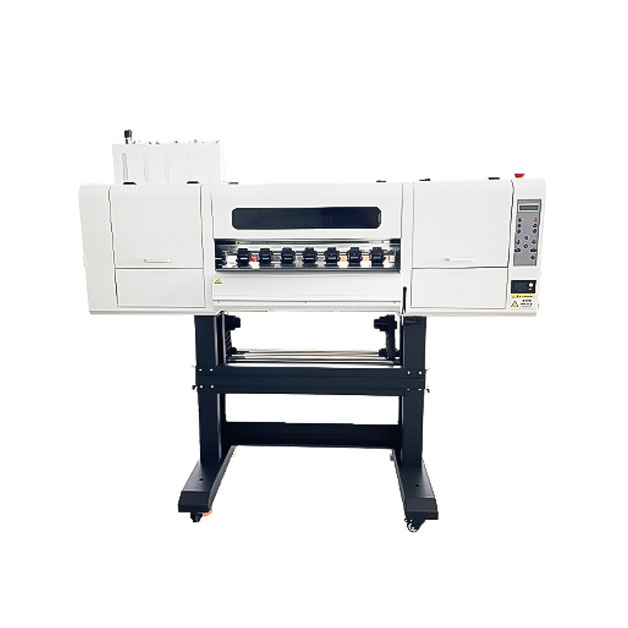
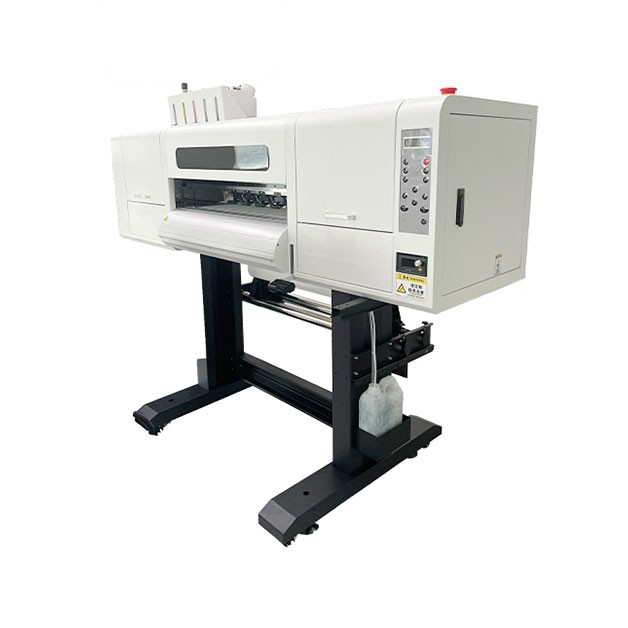

Let’s be honest for a second. If you’ve been anywhere near the custom apparel space in the last two years, you’ve heard the hype. Direct-to-Film printing has been called a revolution, a gold rush, and the death of screen printing. But for every success story, there’s a cautionary tale of a $3,000 machine gathering dust because someone bought the wrong system, used the wrong ink, or simply didn’t understand the workflow.
Here is the reality of 2026: The “gold rush” phase of DTF is over. The “boring, profitable maturity” phase has begun. And that is actually great news for you.
The early adopter headaches—unstable white ink, finicky software, machines that required a chemical engineering degree to operate—are largely solved. Today’s DTF machines are more reliable, more automated, and more accessible than ever before . But the market is also more crowded. To succeed now, you don’t just need a machine; you need a strategy.
This guide isn’t another list of “Top 10 Printers.” This is a deep dive into the 2026 DTF landscape. We will look at the game-changing technology entering the market, the brutal math of profitability, the hidden traps that still swallow startups, and how to position yourself not just as a printer, but as the go-to decorator in your area.
The pace of innovation in DTF hasn’t slowed; it has simply shifted focus. The question is no longer “can it print on polyester?” but “can it print 500 sheets before lunch without clogging?” The industry has matured, and the tools reflect that.
For years, if you wanted a DTF machine that could run for 12 hours straight without babysitting, you paid a premium—often well over $20,000. That barrier is crumbling. We are now seeing a “trickle-down” of industrial engineering into more accessible price points.
Take, for example, the recent updates to the Roland DG TY-300. This isn’t a new machine, but its 2026 enhancements tell us exactly where the market is heading. Roland has doubled the white ink reservoir capacity and implemented “smart circulation” that keeps pigment flowing even during idle periods . Why does this matter? Because white ink sedimentation is the number one killer of DTF printheads. By solving this at the engineering level, manufacturers are drastically reducing the single biggest maintenance headache for shop owners.
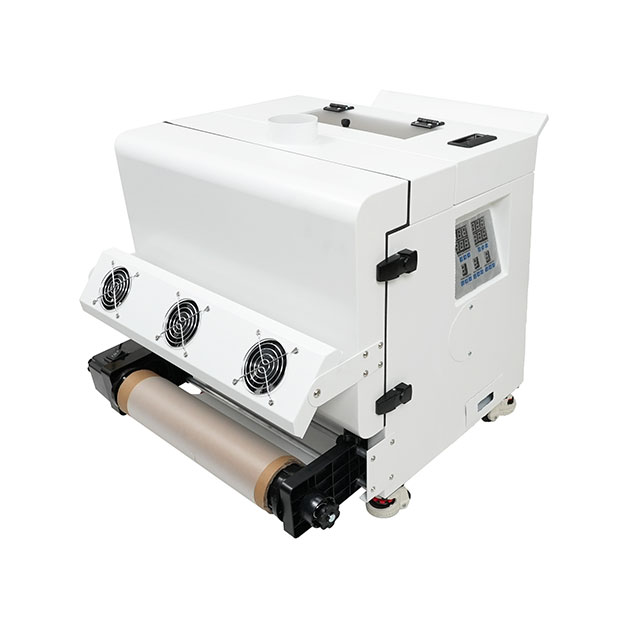
Similarly, Brother has entered the industrial DTF arena with the DTRX system, specifically designed for medium- to high-volume environments. It features an integrated adhesive curing unit with HEPA filtration and infrared curing technology, ensuring consistent bonding and a soft hand feel . The key takeaway here is system integration. In 2026, success comes from machines where the printer, powder, and curing unit are designed to work as one, not as a collection of hobbyist parts Frankensteined together.
While industrial systems get more robust, the entry-level market is also undergoing a transformation. Brands like Huedrift have launched lines specifically for “creators”—the Etsy sellers, the side-hustlers, the weekend warriors .
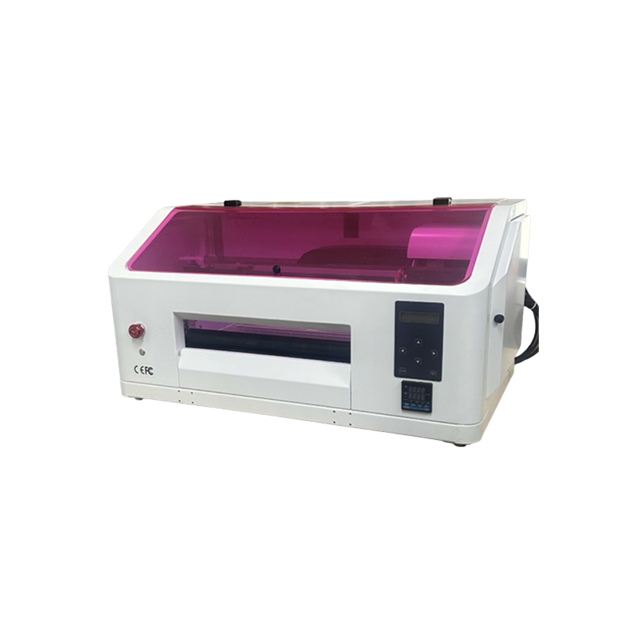
The Huedrift Pro Max, for instance, targets entrepreneurs ready to scale, offering stable white ink circulation and faster speeds at a fraction of the cost of industrial units . This bifurcation of the market is critical: you no longer have to choose between a cheap toy and a factory-priced monster. There are now purpose-built machines for every volume tier, from the garage (10-15 shirts a day) to the dedicated production facility (100+ shirts a day) .
It is dangerously easy to look at a $2,500 printer and think, “I’ll make that back in a month.” Maybe you will. But to do so, you need to understand the true cost of ownership, not just the ticket price.
Profitability in DTF lives and dies by your Cost Per Print (CPP). If you don’t know this number down to the penny, you are pricing in the dark.
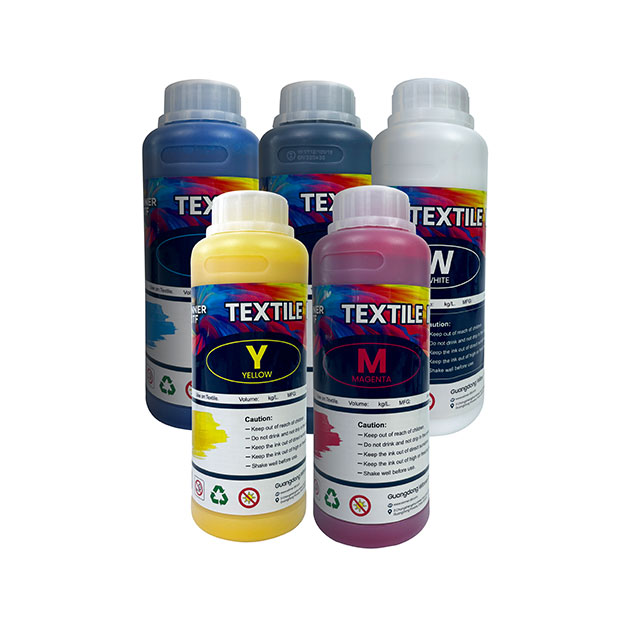
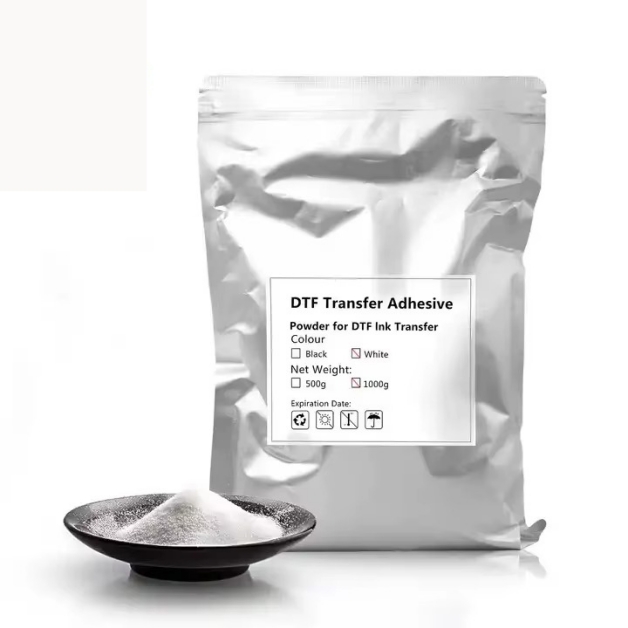
Let’s break down the consumables for a standard 11″ x 17″ transfer based on 2026 market rates :
This puts your raw material cost between $0.85 and $1.80 per transfer. But that’s just the beginning.
You also have to factor in waste. A budget machine might have a first-pass yield of only 86%, meaning 14 out of every 100 prints are garbage . If each wasted sheet costs you $1.50 in materials, you’re burning $21 for every 100 prints. Over a year, that could be the cost of a new printhead. Machines with better thermal stability and registration control, like the ChromaFlex DTF-Eco which boasts a 95.1% first-pass yield, effectively pay for themselves in saved materials .
Beyond film and ink, the silent killers of your margins are:
Sourcing a DTF machine directly from China via Alibaba can save you 40-70% compared to buying from a domestic reseller . But the risk is real. In 2026, the market has matured, but the sharks are still there. Here is how to navigate it like a pro.
You cannot trust the listing. You must verify the hardware. When contacting suppliers, treat it like a job interview. Demand a live video call showing :
The market on Alibaba now has clear stratification :
Consider the case of “ThreadHive,” a Toronto startup that initially bought a mislabeled printer with a generic head and an underpowered dryer. They lost $3,400 on a failed rush order before switching suppliers. Their second attempt—a DTF Pro-X3 from a verified supplier—involved a factory video call, thermal imaging proof, and has since run for 927 hours with zero printhead failures . The lesson: Verification isn’t paranoia; it’s insurance.
The difference between a machine that makes you money and one that costs you money often comes down to your 8 a.m. routine.
If you skip the morning nozzle check, you are gambling with your entire day’s production. A missing nozzle might only show up as a faint line halfway through a 50-print job, at which point you’ve wasted film, ink, and time.
Use your RIP software’s nozzle check function every single morning . A perfect check shows all lines clean and unbroken. If you see gaps, you have a clog.
White ink is heavy. If it sits still, it turns into sludge. This is why 2026-grade machines prioritize continuous ink circulation. The updated Roland TY-300 and the xTool Apparel Printer, for example, feature auto-stir and recirculation to keep pigment particles suspended .
If your machine doesn’t have active circulation, you must manually agitate the white ink bottles daily and run a cleaning cycle to refresh the ink in the lines. Neglecting this is the fastest way to destroy a printhead .
Let’s look at a realistic scenario based on current market data.
Meet “Jasmine,” a graphic designer in Austin. In late 2025, she bought a DTFJet Lite X7 for $2,895. Her goal wasn’t to become a massive manufacturer; it was to offer custom western shirts to local bars—a niche she knew well.
Her initial costs were higher than expected because she was learning. But because the Lite X7 had automated nozzle verification and consistent white ink laydown, her waste was only 3.2% from Month 1 . By Month 3, she had three bar accounts.
Jasmine’s genius move wasn’t in the printing; it was in the logistics. She partnered with a local fulfillment center. She would print the transfers in the morning (about 2 hours of work), drop them off, and the center would press and ship them. This freed her to design and sell.
By focusing on the math, she knew her cost per 11×17 transfer was roughly $1.20. She charged $8 per transfer to her fulfillment partner, who then billed the bars. That $6.80 gross profit per transfer added up quickly. On a typical 24-shirt order, she cleared $163 in profit for essentially design and print time. Within nine months, she hit $8,500 in monthly revenue, and her machine had paid for itself six times over .
Before you finalize any purchase, run through this list. If a seller hesitates on any point, walk away.
The DTF machine market of 2026 is a land of opportunity for the informed and a minefield for the impulsive. The technology has stabilized to the point where consistency is expected, not hoped for. The machines are smarter, the inks are better, and the workflow is more integrated than ever before.
Whether you are a screen printer looking to expand, an Etsy seller ready to scale, or an entrepreneur building a brand from scratch, a DTF machine can be the most versatile tool in your arsenal. But it is just a tool. The business—the design sense, the customer relationships, the operational discipline—that part is still all you.
So, buy the right tool. Learn its quirks. Master the math. And then, go build something great.
Are you currently running a DTF setup, or are you deep in the research phase? I’d love to hear what’s holding you back or what’s exceeding your expectations. Drop a comment below—let’s build a community of informed decorators who help each other avoid the pitfalls.
If this guide saved you from making a costly mistake, share it with a friend who’s also looking at machines. The more we all know, the better our industry gets.