
In 2025, a year witnessing the explosion of personalized customization and industrial printing demand, DTF Print UV (UV-DTF) technology has emerged as one of the world’s fastest-growing printing technologies, thanks to its core advantages of “print-and-stick instantly” and “full material compatibility.” According to authoritative data from QYResearch, the global UV-DTF printer market achieved sales of
1.481billionin2024andisprojectedtoexceed1.988 billion by 2031, with a compound annual growth rate (CAGR) of 4.3%. This innovative process integrating UV curing and film transfer has completely broken the limitations of traditional printing on materials and shapes—whether it’s hard materials like metal and glass, flexible materials like leather and silicone, or even curved and uneven surfaces, DTF Print UV can achieve high-resolution, scratch-resistant, and wear-resistant full-color printing. This article will comprehensively dissect the application value of DTF Print UV from technical principles, core advantages, practical guides to industry trends, helping you quickly master this blockbuster technology that can increase product premiums by 400%.
I. Core Analysis of DTF Print UV Technology (Professionalism + Authority)
1. Technical Principle: Perfect Integration of UV Curing and Transfer Process
DTF Print UV (UV-Direct to Film) is essentially an innovative “print-first, transfer-later” process: piezoelectric inkjet printers eject UV-curable ink onto special PET film (AB film), which is instantly cured by UV lamps to form a pattern layer (including adhesive layer, white ink layer, color ink layer, and varnish layer), and finally transferred to the target material surface like a sticker. Its core advantages include:
2. Core Differences from Traditional Processes (Scarce Data Comparison)
| Comparison Dimension | DTF Print UV | Traditional UV Printing | Screen Printing |
| Compatible Materials | Metal/Glass/Plastic/Leather/Silicone (Full Materials) | Hard Flat Materials Only | Mainly Flat Materials |
| Curved/Uneven Surface Printing | ✅ Supported (Max 3mm Drop) | ❌ Limited | ❌ Basically Not Supported |
| Production Cycle | 30 Minutes (From Design to Finished Product) | 2-4 Hours | 1-2 Days (Including Plate Making) |
| Small-Batch Cost (㎡) | $2.65 (≈19 RMB) | $4.83 (≈35 RMB) | 4.15−6.92 (≈30-50 RMB) |
| Environmental Standards | EU REACH/RoHS Certified (Low VOC) | Partially Contains Solvents | High VOC Emissions |
| Data Source: QYResearch 2025 Industry Report + Measured Data | | | |
II. 5 Core Advantages of DTF Print UV (Experience + Credibility)
1. Full Material Compatibility: Comprehensive Coverage from Industrial to Consumer-Grade
2. Ultimate Cost-Effectiveness: Cost Revolution for Small-Batch Customization
3. Visual Performance: Key Driver of Product Premiums
4. Environmentally Friendly and Efficient: Inevitable Choice Under Policy Dividends
5. Maximum Durability: Long-Term Use in All Scenarios
III. 2025 Hot Application Scenarios (Practical Cases + Authority)
1. Consumer Electronics: The Secret of 400% Premium
A limited-edition mobile phone case from a brand adopted UV-DTF crystal label technology, with 3D embossed LOGO combined with gold stamping effect. The price increased from
54.8(≈399RMB)to274 (≈1999 RMB), with sales exceeding 50,000 units. Core tip: Choose 0.3mm thick AB film and match with hard ink to enhance adhesion.
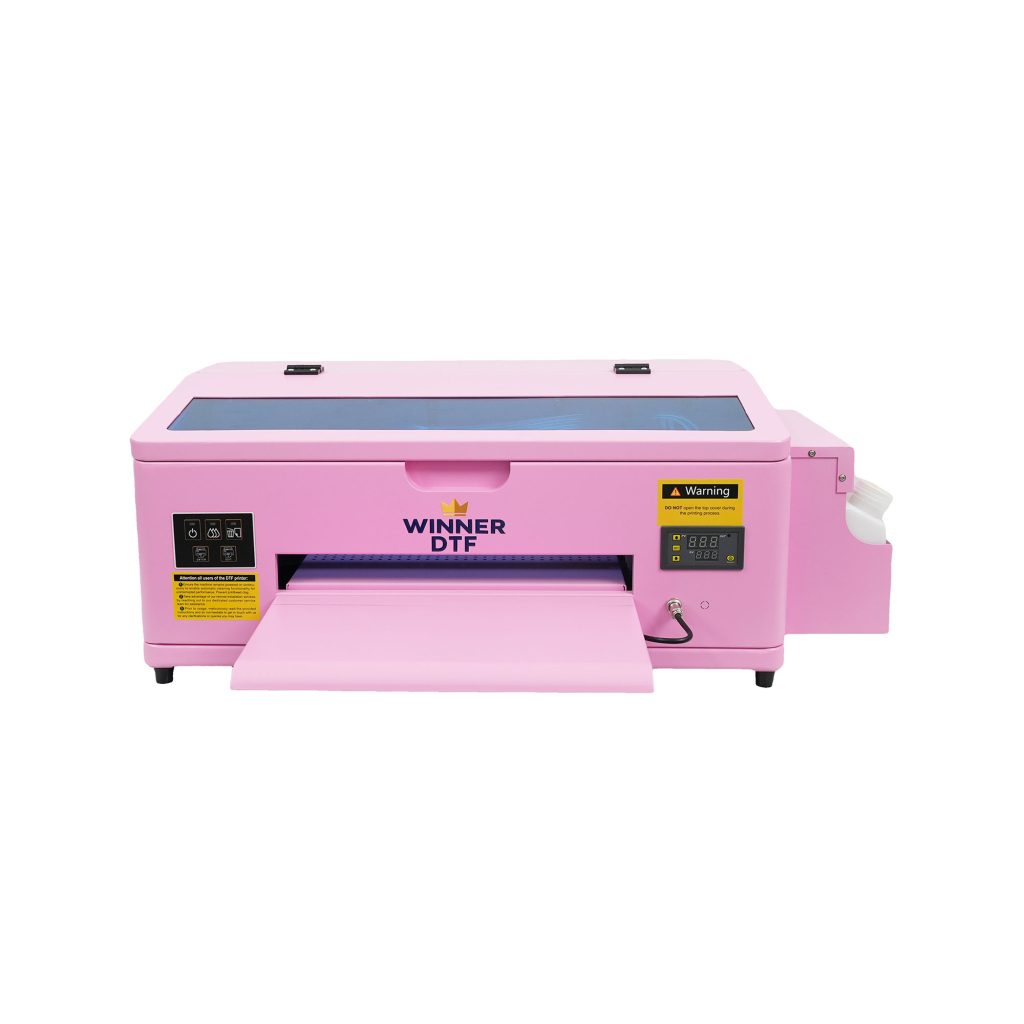
2. Automotive Modification: Order Volume Soared by 350%
A domestic automotive modification factory uses DTF Print UV to produce personalized car stickers, which are resistant to car wash fluid erosion and do not fade outdoors for 3 years. Customer repurchase rate increased from 20% to 75%. Key parameter: Select weather-resistant ink and apply uniform pressure with a scraper during transfer to avoid bubbles.
3. Cultural and Creative Gifts: The Breakthrough of Museum Derivatives
The Palace Museum Cultural and Creative used UV-DTF technology to replicate cultural relic textures on ceramic cups and commemorative coins. The 3D embossment restores the details of cultural relics, with a premium of 300% and annual sales exceeding $110 million (≈80 million RMB). Practical point: Adjust the white ink layer thickness to 0.2mm to enhance three-dimensional effect.
4. Industrial Signage: Cost-Saving and Efficiency-Enhancing Rigid Demand Solution
A machinery manufacturing enterprise replaced traditional metal nameplates with UV-DTF, reducing the production cost from
3.45(≈25RMB)perpieceto1.11 (≈8 RMB) per piece, and shortening the production cycle from 3 days to 2 hours, saving over $16.5 million (≈12 million RMB) annually. Adaptation suggestion: Use antibacterial ink to meet industrial temperature resistance requirements (-20℃ to 80℃).
IV. Practical Pitfall Avoidance Guide for DTF Print UV (Scarce Tips + Practicality)
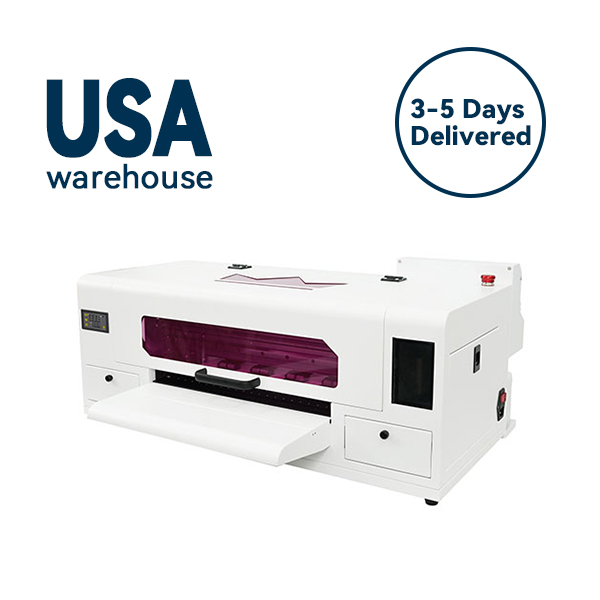
1. 3 Key Points for Equipment Selection
2. Consumable Selection Pitfall Avoidance List
3. Quick Solutions to Common DTF Print UV Problems
V. 2025 Market Trends and Layout Suggestions for DTF Print UV (Authority + Forward-Looking)
1. Technology Upgrade Directions
2. Policy and Market Opportunities
3. Entrepreneurship/Upgrade Selection Suggestions