The DTF Machine: Your 2026 Playbook for Scaling Apparel Printing Beyond the Hype
Table of Contents
The custom apparel landscape has undergone a seismic shift. For decades, decorators were forced to choose between the high setup costs of screen printing and the fabric limitations of Direct-to-Garment (DTG). The Direct-to-Film (DTF) machine has shattered that compromise. By 2026, DTF has matured from a disruptive newcomer into a cornerstone of the printing industry, with the global market projected to grow from $3.08 billion in 2026 to $4.56 billion by 2032.
But as the market expands, the noise does too. Walk into any industry trade show or scroll through social media, and you are bombarded with claims of “revolutionary” printers at “unbeatable” prices. The reality is more nuanced. A DTF machine is not a magical black box; it is a precision-engineered ecosystem of printheads, ink circulation systems, and curing mechanisms. Buying the wrong one—or neglecting the right one—can turn your path to profitability into a costly lesson in downtime.
This is not just another buyer’s guide. This is your 2026 playbook for understanding, selecting, and mastering DTF technology to build a resilient, scalable printing operation.
The Economic Case for DTF in a Post-Pandemic World
Why has DTF become the default answer for so many printing businesses? The answer lies in its unique ability to decouple complexity from output. Unlike screen printing, where each color adds setup time and cost, or DTG, which struggles with garment blends and pretreatments, DTF offers a streamlined, versatile workflow .
Unlocking Material Versatility
The primary economic driver for DTF adoption is substrate agnosticism. A high-quality DTF transfer adheres equally well to cotton, polyester, nylon, leather, and even hard surfaces like wood or acrylic. For a print shop, this means saying “yes” to more orders. When a client brings in a bulk order of polyester jerseys and a handful of cotton tote bags, you don’t need to switch methods or outsource. You print once, transfer everywhere. This capability directly expands your total addressable market without requiring additional capital expenditure .
The On-Demand Inventory Advantage
Traditional screen printing relies on economies of scale, pushing clients to order hundreds of units to make the setup cost worthwhile. This creates inventory risk. DTF flips this model. Because there are virtually no setup costs, a DTF machine enables true print-on-demand. You can print a single transfer for a sample, a dozen for a niche design, or a thousand for a stadium event—all with the same per-unit efficiency. This flexibility allows your clients to operate leaner, and it allows you to command higher margins for just-in-time services.
Anatomy of a DTF Machine: Beyond the Sheet Metal
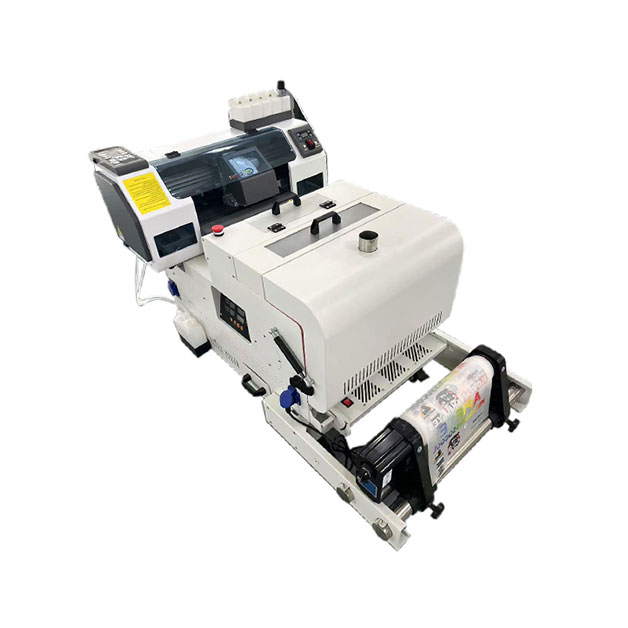
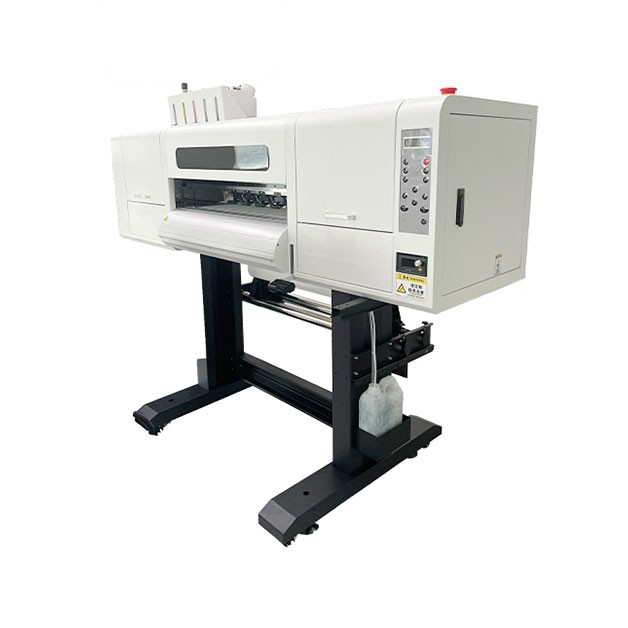
To navigate the 2026 market, you must understand what lies beneath the hood. A DTF machine is more than a standard inkjet printer with a different ink set. It is a system specifically engineered to handle the unique challenges of white ink and adhesive powder.
Printhead Architecture and Thermal Stability
At the heart of every DTF machine lies the printhead. In 2026, the market is dominated by variants of Epson printhead technology, specifically the XP600, I1600, and L1800 models . The choice of printhead dictates your speed, quality, and maintenance burden.
Single vs. Dual Heads: Entry-level machines often feature a single printhead (like the L1800 or F1080). These are excellent for learning and low-to-mid volume production. However, if you are processing more than 20-30 sheets a day, a dual-head configuration (such as the I1600 in the OMTech Aurora D1 Pro) becomes essential. Dual heads effectively double the output of white ink and color, allowing for faster print speeds and denser white layers without multiple passes .
Protection Systems: The biggest enemy of a DTF printhead is idle time. When not in use, water-based pigment inks dry and clog. Premium machines now include automatic moisturizing capping stations that seal the printhead and maintain a humid environment, drastically reducing clogs for shops that don’t run 24/7 .
The White Ink Circulation Mandate
If printheads are the heart, white ink is the lifeblood of DTF. White ink is heavy; the titanium dioxide pigments that give it opacity will settle, separate, and solidify if left stagnant. A DTF machine without robust white ink management is a ticking time bomb.
Continuous Circulation vs. Agitation: Low-end printers might use a simple magnetic stir bar in the bottle. This is insufficient. Look for systems that offer continuous low-shear circulation, pulling ink from the bottle, through the lines, and past the printhead, then returning it to the bottle. This maintains consistent viscosity and pigment dispersion from the first print to the last .
Bottle Stirring Mechanisms: Beyond line circulation, the ink bottles themselves need agitation. Machines like the OMTech Aurora series include mechanical stirrers within the white ink tank to prevent the “cake” of pigment that forms at the bottom during extended idle periods .
Film Handling and Registration Precision
A DTF machine must manage a delicate web of PET film. Inconsistent tension or roller wobble leads to misregistration—where the color layers don’t align perfectly with the white underbase. High-end entry machines utilize dual independent rollers with optical edge detection to maintain tolerance within ±0.15mm . This ensures that fine text remains sharp and that colors don’t bleed outside the lines. Cheaper, single-roller friction feeds will inevitably cause skew, leading to wasted film and frustrated operators.
The 2026 Buying Matrix: Matching the Machine to Your Mission
The “best” DTF printer doesn’t exist in a vacuum. It depends entirely on your production volume, technical aptitude, and growth trajectory. Let’s break down the market segments as they stand in mid-2026.
The Startup Sprinter: Entry-Level Commercial Viability
For businesses processing 5-20 orders a week, the priority is reliability without breaking the bank. The sweet spot in 2026 is the $2,800 to $3,500 range.
Top Pick: DTFJet Lite X7: Priced around $2,895, this unit has become a favorite for its “set-it-and-forget-it” white ink circulation. It boasts a 94.2% first-pass yield, meaning you waste less film. Its self-diagnosing capping station is a lifesaver for new operators who might forget daily maintenance .
Trade-offs: These units often have width limitations (typically 13” or 14”) and slower top speeds. They are designed for quality and consistency, not mass production.
The Production Powerhouse: Scaling for Volume
If you are running two shifts or fulfilling 50+ orders daily, you need industrial-grade throughput.
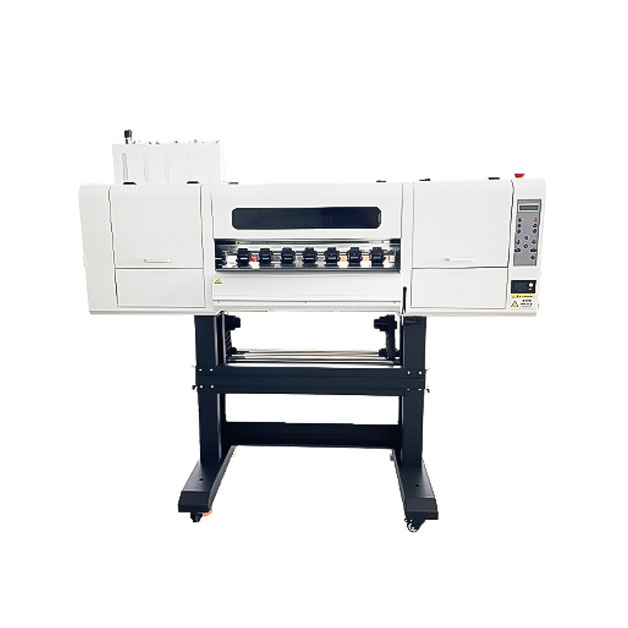
Top Pick: OMTech Aurora D1 Pro: With dual I1600 printheads, this machine achieves print speeds of 4.64 m²/h, roughly 4-5 times faster than entry-level single-head units . Its sturdy build (36 kg) dampens vibration, ensuring precision at speed.
Why it wins: It includes not just circulation, but automated features like ink shortage alarms and waste ink alarms, preventing mid-job interruptions and messy overflows. This allows you to focus on fulfillment, not firefighting.
The Hybrid Operator: Versatility for Specialty Items
Some shops need the flexibility to print on rigid substrates or odd-shaped items.
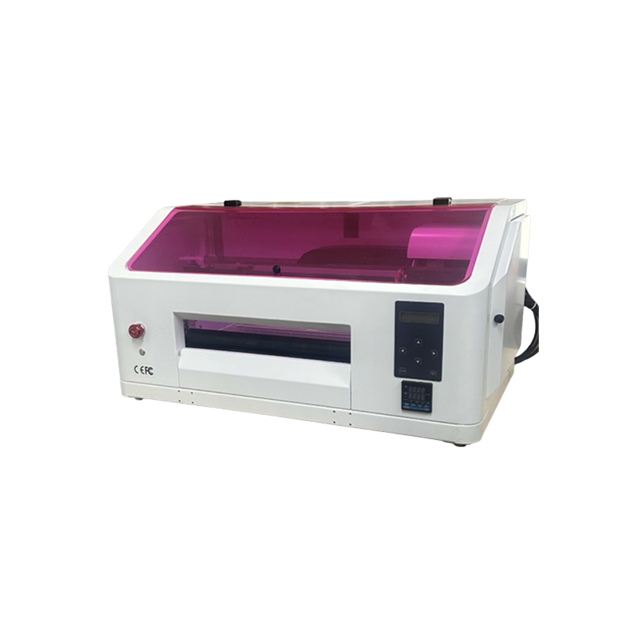
Consideration: While dedicated DTF printers excel on film, a hybrid UV DTF printer might be the answer. These allow you to print on a special film and transfer to water bottles, phones, and hard goods. However, they are a different category with different ink chemistry and cost structures, often serving as a secondary machine rather than a primary workhorse .
The Unseen Economics: Tariffs, Trade, and Total Cost of Ownership
A hard truth for 2026: the sticker price is just the entry fee. The 2025 United States tariff adjustments have rippled through the DTF supply chain, affecting not only finished printers but also critical components like printheads and specialty films .
The Tariff Effect on Your Bottom Line
Tariffs have increased the landed cost of imported equipment, squeezing margins for distributors. This pressure often gets passed down to you. However, it has also accelerated a positive trend: the growth of domestic parts warehousing and service networks. When evaluating a DTF machine, ask the distributor:
Where are your parts stocked? (Local parts mean less downtime).
Are service technicians regional, or do I have to ship the unit back? (Shipping a 35kg machine is expensive and time-consuming).
Calculating True Cost of Consumables
The printer is the razor; the ink and film are the blades. Some manufacturers subsidize the hardware cost by locking you into expensive, proprietary consumables.
Ink Cost Per Print: The DTFJet Lite X7, for example, might save you $1,020 in film waste in the first quarter due to its consistent laydown, despite a higher upfront cost than a bare-bones competitor .
Warranty Fine Print: Always verify if using third-party ink voids your warranty. Some 2026 models, like the ChromaFlex DTF-Eco, are beginning to certify select third-party inks, giving you flexibility . If you’re locked in, factor the cost of that ink over 24 months into your purchase decision.
Mastering the Beast: Maintenance as a Profit Center
You can buy the best DTF machine on the market, but neglect it for a week, and it will become an expensive paperweight. DTF maintenance is non-negotiable. It is the difference between a machine that earns its keep for five years and one that dies in eighteen months .
The Daily Ritual: Environment and Capping
Climate Control is King: DTF film is hygroscopic. If your shop humidity exceeds 60% RH, the film absorbs moisture, leading to poor adhesion. If it drops below 40% RH, static builds up, attracting dust to the wet ink. Maintain a strict 45–55% RH and a temperature of 20–24°C (68–75°F).
Wet Capping: At the end of each day, perform a “wet capping” routine. Fill the ink stack pads in the maintenance station with moisturizing fluid. When the printhead parks, it makes contact with this fluid, ensuring the nozzles stay moist and are ready to fire the next morning .
The Weekly and Monthly Deep Dive
Ink Quality Audit: White ink should be consistent, like heavy cream. If it looks separated or clumpy, the circulation motor might be failing .
Mechanical Lubrication: The rails that the printhead carriage slides on need lubrication. Use white lithium grease specifically. WD-40 or generic oils will evaporate or gum up the works, causing the carriage to stall .
Damper Checks: The small chambers (dampers) between the ink line and the printhead regulate flow. If you see air bubbles trapped there, or ink leaking, replace them immediately. Air in the lines acts like an embolism, starving the printhead of ink and causing faded prints or burned-out nozzles .
DTF vs. The World: Why It’s the King of Versatility
In the great debate of custom apparel, DTF has carved out the largest territory. Let’s look at the battlefield map:
DTF vs. Screen Printing: Screen printing still wins on absolute cost-per-unit for orders of 500+ identical, simple designs. But for anything less, DTF wins on speed-to-market and zero setup fees .
DTF vs. DTG: DTG offers an unbeatable “hand feel” (the softness of the print) on 100% cotton light-colored shirts. However, DTG requires pretreatment and fails on polyester. DTF works on everything, and on dark fabrics, it often produces more vibrant colors than DTG because the white underbase can be laid down thicker .
DTF vs. Sublimation: Sublimation infuses dye into polyester, creating a print with no texture at all. It’s perfect for all-over prints on sportswear. But it’s useless on cotton. DTF captures the orders sublimation can’t touch.
From Machine to Money: Operationalizing Your Investment
Buying a DTF machine is not the goal; generating revenue is. Here is how successful shops are turning their DTF investment into a profit center.
Workflow Integration and Automation
RIP Software: Your Raster Image Processor (RIP) is your command center. Software like Wasatch SoftRIP or Ergosoft allows you to nest multiple jobs on one sheet, saving film. It manages color profiles to ensure your monitor matches your print, and it controls white underbase generation—the most critical step for quality .
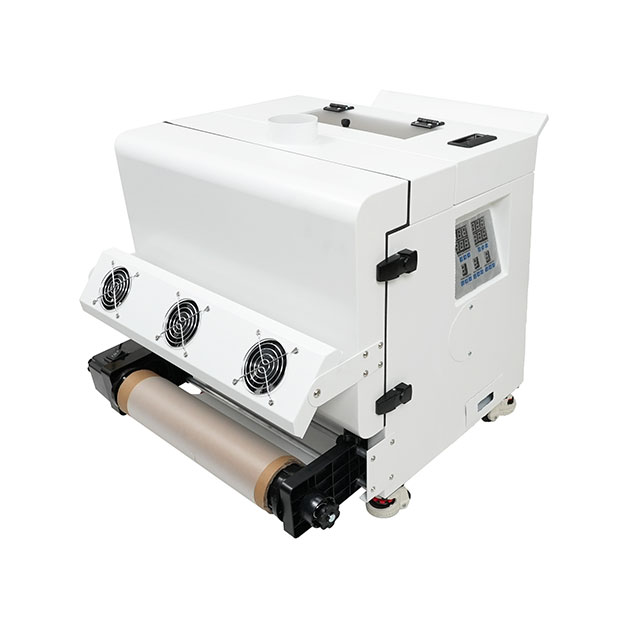
The Powder Shaker Station: Don’t underestimate the post-print process. An integrated powder shaker and curing oven must be synchronized with your printer speed. If the oven is too slow, your wet prints pile up. If it’s too fast, the powder doesn’t melt correctly, leading to transfers that crack.
Marketing Your Capabilities
In the B2B space, being found online is half the battle. As seen with successful brands like DTF New England, dominating local SEO with high-intent keywords like “custom DTF transfers for polyester jackets” drives inbound leads . Your machine is a tool; your content marketing—showing the vibrant results on difficult fabrics—is the engine that attracts buyers ready to convert .
The Verdict: Your DTF Machine is a Partner, Not a Purchase
The DTF machine market in 2026 offers unprecedented opportunity, but it demands unprecedented diligence. The days of buying a cheap, unbranded unit and hoping for the best are over. Today’s winners are those who view their DTF printer as a long-term partner.
They invest in machines with proven printhead protection, robust ink circulation, and reliable local support. They respect the environmental controls required to keep the process stable. They build their brand around the versatility that DTF provides.
Whether you choose the startup-friendly DTFJet Lite X7, the production-ready OMTech Aurora D1 Pro, or another model entirely, the principle remains the same: Understand the technology, commit to the maintenance, and the machine will not just print transfers—it will print profit.
Subscribe
To join our mailing list and never miss our updates !