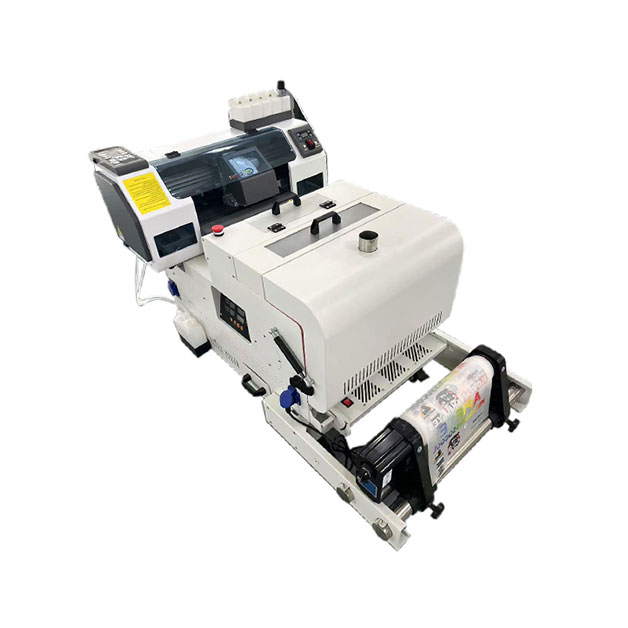
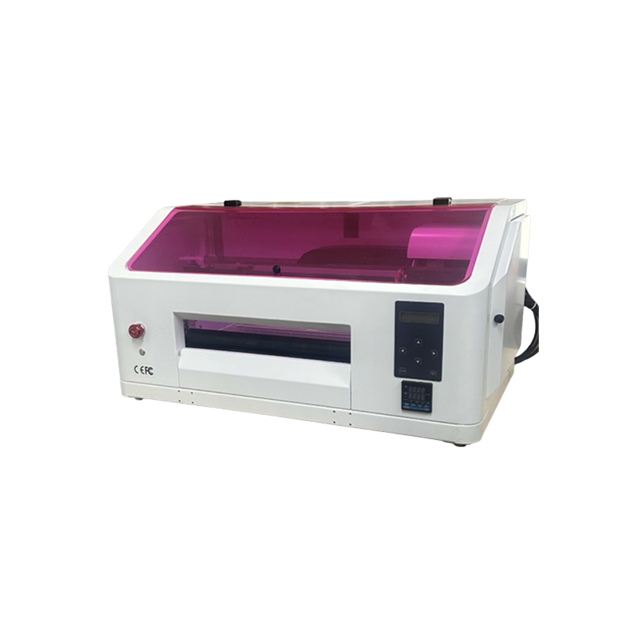
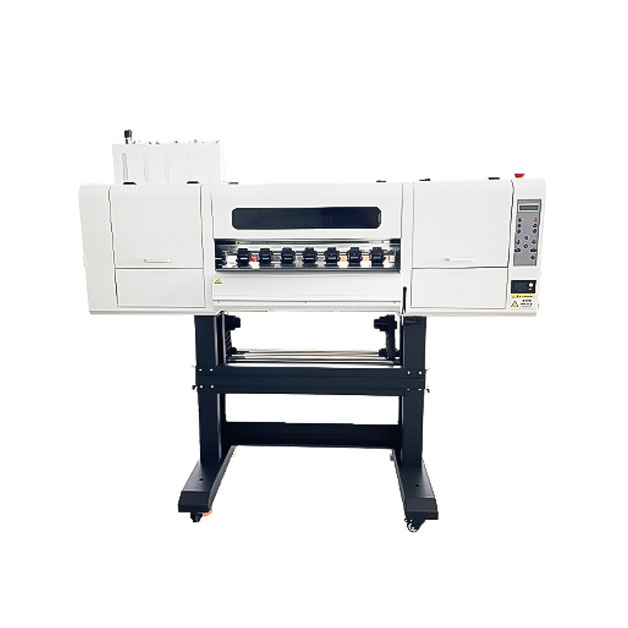
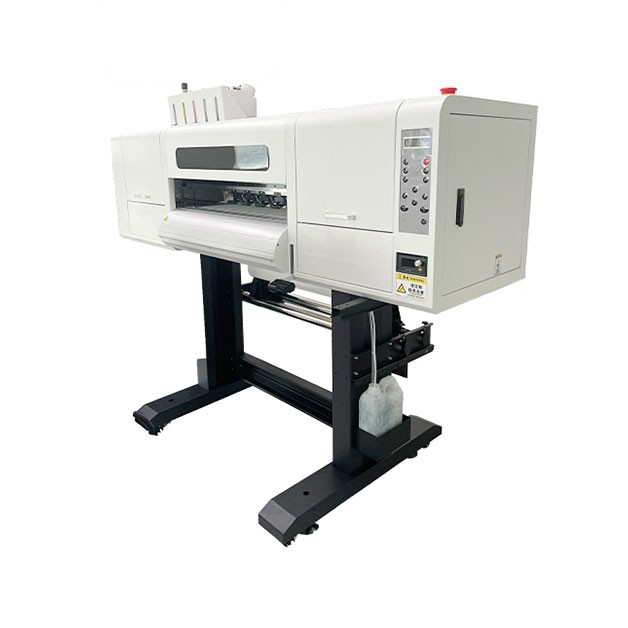

If you’ve been watching the custom apparel space, you’ve seen the DTF explosion. What started as a garage-based experiment has matured into a legitimate industrial force. But here’s the uncomfortable truth as we move through 2026: the era of “just buy a printer and watch money appear” is over. The market has shifted beneath our feet.
Today’s DTF landscape is defined by production scalability, color consistency, labor efficiency, and environmental compliance . The hobbyists are being separated from the professionals not by the size of their machines, but by the rigor of their operations. The questions have changed. It’s no longer “can DTF print on polyester?” but “can my DTF system run 500 sheets before lunch with zero banding and predictable white ink opacity?”
This guide isn’t for the casually curious. It’s for the shop owner who already knows the basics and is ready to move from surviving to thriving. We’re going to dissect the 2026 DTF market through the lens of industrial trends, brutal cost accounting, smart sourcing strategies, and the maintenance discipline that separates assets from liabilities.
The DTF market is undergoing a structural transformation. The technology that worked for 20-shirts-a-day operations is being rapidly outpaced by demands for higher volume, better color, and cleaner workflows.
If you’re still looking at single-printhead machines, you’re looking at yesterday’s technology. The industrial shift is unmistakably toward multi-head platforms that fundamentally change production economics. Sublistar, among others, has identified that early two-head configurations, once considered advanced, now limit throughput and offer little flexibility for changing order profiles .
In 2026, seven- and eight-head configurations are in active deployment in serious production environments . This isn’t about bragging rights—it’s about math. Multiple heads allow you to:
The modular approach means you can balance efficiency and customization without sacrificing day-to-day production stability. If you’re projecting growth beyond 50 shirts a day, single-head machines will become your bottleneck.
Here’s a question that would have seemed absurd three years ago: Is your DTF printer capable of brand-compliant color?
As DTF moves into sportswear, promotional graphics, and licensed merchandise, color accuracy and visual consistency have become non-negotiable . Brands don’t accept “close enough.” They demand Pantone matches, batch-to-batch repeatability, and output that holds up under scrutiny.
This is driving demand for advanced multi-color DTF configurations beyond the standard CMYK+W setup. Systems are now being subjected to independent third-party evaluation—Sublistar’s multi-color platforms, for example, have met certification criteria from Keypoint Intelligence, confirming performance in color consistency and output stability under production conditions .
For you, this means: if you’re courting brand work or planning to, your machine’s color capability matters as much as its speed. Ask for spectrophotometer readings. Demand Delta E reports. The days of “eyeballing it” are ending.
Let’s talk about money—specifically, the money that leaks out of your operation in ways you might not be tracking. The difference between a profitable DTF setup and a breakeven headache often lives in the decimal places.
For a standard 11″ x 17″ transfer, your raw material costs break down roughly as follows:
This puts your baseline material cost between $0.85 and $1.80 per transfer . But that’s just the beginning.
The real differentiator is first-pass yield—the percentage of prints that pass inspection without rework. A budget machine might deliver 86% first-pass yield, meaning 14 out of every 100 prints are garbage due to banding, misregistration, or white ink gaps . At $1.50 per wasted sheet, that’s $21 burned for every 100 prints. Over a year of moderate production, that’s the cost of a new printhead walking out the door.
Compare that to machines like the ChromaFlex DTF-Eco, which boasts 95.1% first-pass yield . The 9% difference in waste isn’t just saved materials—it’s saved time, saved frustration, and saved client relationships.
xTool’s cost analysis provides a useful comparison point. If you’re producing 250 shirts per month at a $20 selling price:
In-house printing:
Outsourcing transfers:
The $11,000 annual gap explains why serious operators bring production in-house. But note: these numbers assume you’ve chosen equipment that delivers on its yield promises. The gap narrows—or reverses—if you’re fighting constant reprints.
Beyond film and ink, the silent budget killers are:
The DTF equipment market has matured to the point where “budget” no longer automatically means “compromised.” But the options have also multiplied, creating decision paralysis. Here’s how to think about your sourcing strategy.
In early 2024, “cheap” DTF printers often meant rebranded Chinese OEMs with minimal firmware updates, no local technical support, and inconsistent color registration . By 2026, the landscape has fundamentally changed. Reputable manufacturers now offer purpose-built entry-tier models—typically priced between $2,200 and $3,499—that include factory-calibrated linear encoders, dual-roller film feed systems, and embedded humidity control .
These aren’t stripped-down versions of pro models; they’re engineered for volume consistency at lower throughput (up to 25–30 film sheets per hour). The key insight: true affordability includes total cost of ownership over 24 months—not just sticker price.
For those with tighter budgets or testing demand, the used market offers strategic advantages—but only with rigorous due diligence. New machines depreciate 30-40% in their first year, while late-model units from 2022-2023 (especially Epson-based platforms) retain 90% of functional capability at 45-60% of the cost .
However, the secondhand market is rife with hidden risks: refurbished units misrepresented as “like new,” uncalibrated printheads, outdated firmware, and sellers who omit critical maintenance history .
The verification protocol for used machines:
Whether new or used, these five non-negotiables determine whether your machine becomes an asset or an albatross:
1. Printhead Type & Protection System
Epson-based printheads (XP600, I1600, I3200) remain the gold standard for proven longevity. Avoid unbranded or proprietary heads without documented MTBF data. Look for active capping stations and automated nozzle checks .
2. Film Feed Precision
Wobble or skew causes misregistration and waste. The best units use dual independent rollers with optical edge detection, tolerance ≤ ±0.15mm across 30cm width .
3. White Ink Circulation
This is the single most critical feature. Sedimentation kills DTF printers. Effective circulation requires both continuous low-shear agitation and recirculation through a filter before reaching the printhead. Passive stirring (magnetic stir bars) is insufficient for 2026 pigment formulations .
4. RIP Software Capabilities
Free bundled RIPs often limit layers, disable color profiling, or restrict batch processing. Prioritize machines bundled with Wasatch SoftRIP, Ergosoft DTF Edition, or PrintFactory DTF .
5. Thermal Stability
Look for PID-controlled heated platen zones (not ambient heaters) with verified surface temperature uniformity within ±2°C .
You can buy the best machine on earth, but if your morning routine is sloppy, your printheads will fail. Maintenance isn’t a cost—it’s profit protection.
If you skip the morning nozzle check, you’re gambling with your entire day’s production. A missing nozzle might only show up as a faint line halfway through a 50-print job, at which point you’ve wasted film, ink, and time .
Use your RIP software’s nozzle check function every single morning. A perfect check shows all lines clean and unbroken. If you see gaps :
The nozzle check tells a story :
If your printheads are over 10 months old, expecting 3-5 fine broken lines after cleaning is normal—these are aging nozzles that don’t affect print quality .
White ink is heavy. If it sits still, it settles into sludge. This is why 2026-grade machines prioritize continuous ink circulation .
If your machine lacks active circulation, you must manually agitate white ink bottles daily and run cleaning cycles to refresh ink in the lines. Neglecting this is the fastest path to printhead destruction.
Common white ink issues trace to :
The most significant trend for 2026 and beyond isn’t about the printer itself—it’s about everything around it.
Through sales engagement and after-sales support, manufacturers have observed a growing number of DTF producers—particularly in European markets—placing greater emphasis on environmental compliance, workplace conditions, and material handling . Concerns around powder residue, odor, and sustainability are increasingly influencing purchasing decisions.
This has accelerated development of powderless DTF systems as alternatives to traditional powder-based workflows. However, the practical reality is more complex. Without powder, adhesive behavior becomes far more sensitive to mechanical and process consistency .
Insufficient machine flatness can cause adhesive flow and image distortion. Compatibility between ink and adhesive formulations plays a critical role in long-term stability. Nozzle clogging risk increases, placing higher demands on printhead management .
The payoff for getting it right? Powderless systems that have passed internal durability testing of up to 50 wash cycles, delivering consistent adhesion and softer hand feel compared to conventional powder-based output .
Labor cost remains one of the most significant constraints affecting DTF production profitability, particularly in European and North American markets where manual labor expenses remain high .
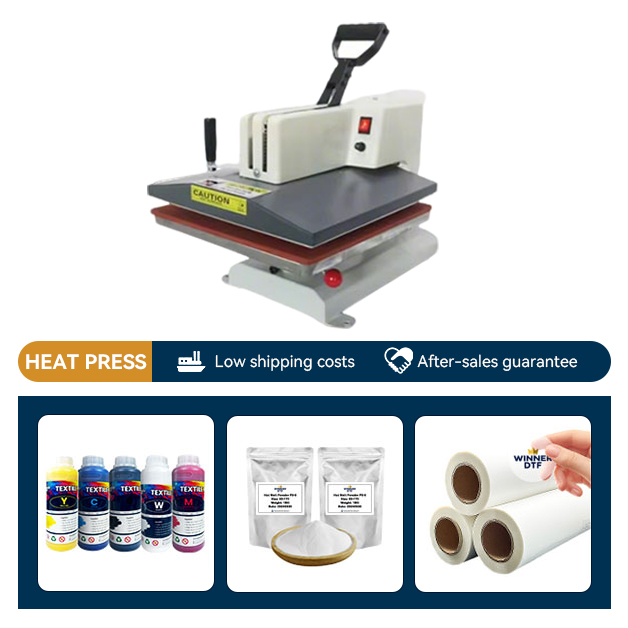
While DTF printing technology has matured rapidly, downstream processes—especially heat pressing—have continued to rely heavily on manual operation, limiting scalability and increasing operational risk .
The response is integrated workflow automation: printing systems, cutting equipment, and automated heat-pressing solutions connected into a more seamless production process. Reducing manual handoffs between steps has become a central design objective .
Manufacturers are introducing patented multi-station automated heat press systems designed to replace a large portion of traditional manual operations. By shifting heat pressing from labor-intensive, step-by-step handling to automated, multi-station processing, production environments can maintain higher throughput with fewer operators, improving consistency while reducing dependence on skilled manual labor .
If you’re a small shop today, these trends may feel distant. But they signal where the industry is heading—and where your competitors will be in 18 months.
The shops that survive and thrive will be those that:
When Maya Rodriguez launched ThreadHaven—a custom apparel shop in Portland—she allocated $3,200 for her first DTF printer. She was tempted by a $2,499 alternative but chose the DTFJet Lite X7 at $2,895 because its automated nozzle verification cut her daily setup time from 22 minutes to under 4.
More critically, its consistent white ink laydown reduced her film waste from 11% to 3.2% in Month 1. At $0.48 per sheet, that saved $1,020 in consumables alone by Q3.
“I thought ‘cheap’ meant I’d trade reliability for price,” she says. “Instead, paying $400 more upfront gave me predictable output—and let me confidently quote 50-piece orders without padding for reprints.”
Her break-even point was reached in 14 weeks. Today, ThreadHaven runs two shifts on that single unit, with zero unscheduled downtime in 11 months.
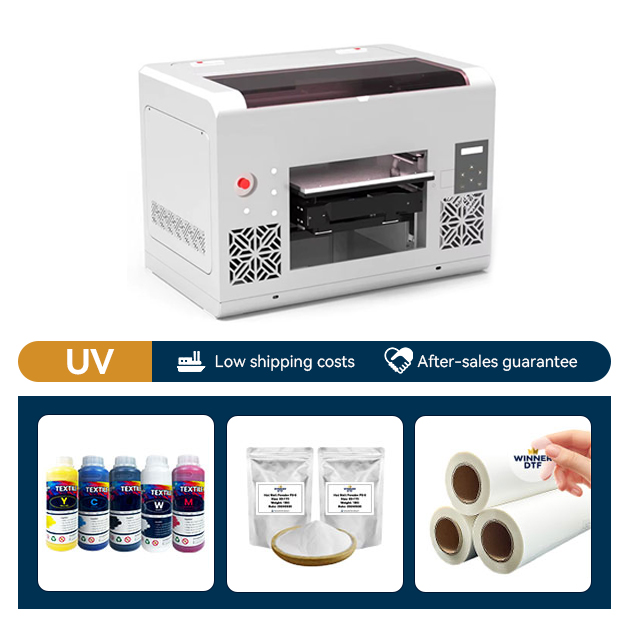
The DTF market has entered a more disciplined phase of global adoption . The rapid experimentation era is yielding to production-oriented requirements: higher efficiency, greater stability, and more predictable day-to-day operation.
Success today isn’t about finding the lowest price. It’s about matching engineering priorities to your operational reality: your order volume, your team’s technical comfort, your facility’s environmental controls, and your tolerance for workflow interruptions.
The printers that deliver true value don’t shout about speed or resolution. They quietly eliminate variables: ink settling, registration drift, drying inconsistency, and software bottlenecks. They turn “DTF setup” from a 30-minute ritual into a 90-second routine. They make white ink behave predictably, day after day .
That reliability compounds—reducing stress, lowering per-unit costs, and building client trust through consistent, professional output.
Your first DTF machine shouldn’t be a gamble. It should be the foundation. So test thoroughly. Demand transparency. Prioritize service over specs. And remember: the cheapest machine isn’t the one with the lowest price tag—it’s the one that lets you focus on your craft, not your equipment.
What’s your biggest DTF challenge right now? Are you struggling with white ink consistency, trying to decide between new and used equipment, or wondering how to scale beyond your current setup? Drop a comment below—real experiences help everyone navigate smarter.
If this guide helped you think differently about your DTF investment, share it with a fellow decorator who’s still on the fence. The more informed our community, the stronger our industry becomes.