
Imagine walking into your workshop, printing a vibrant, glossy design on a special film, and then simply peeling it off and sticking it onto a rough-textured Yeti cup, a leather wallet, or even a curved phone case—all without a heat press, without messy powders, and without worrying about the object fitting in your printer.
This isn’t a futuristic dream. This is UV DTF printing, and it is arguably the most exciting and accessible technology to hit the personalization market since the heat press itself.
For small business owners, Etsy sellers, and print shops looking to expand, UV DTF offers a golden ticket into the world of hard-goods decoration. But what exactly is it, how does it differ from everything else on the market, and most importantly, can it make you money? This deep dive will answer all that and more.
To understand UV DTF, you first have to look at its parents. Traditional UV printing is a direct-to-object method. A flatbed printer jets UV-curable ink onto an item (like a sheet of acrylic) and uses ultraviolet light to instantly cure (harden) it . It is durable and high-quality but requires the object to be perfectly flat or necessitates expensive rotary attachments for cylinders .
DTF (Direct-to-Film) printing, on the other hand, is a transfer method primarily for fabrics. You print a design onto a PET film, coat it with a hot-melt adhesive powder, cure it, and then heat-press it onto a t-shirt .
UV DTF (Ultraviolet Direct-to-Film) is the brilliant hybrid. It uses UV-curable ink, but instead of printing directly on a product, it prints onto a specialized A/B film system . The result is a super-adhesive, ready-to-apply decal. Because the ink is cured on the film, you end up with a “crystal label” or “sticker” that has a raised, glossy texture and can be applied to virtually any surface manually.
The consumables are the secret sauce. UV DTF requires two distinct films :
When you later peel the “sandwich” apart, the cured ink layer stays stuck to Film B, ready to be applied to your product. Film A is then discarded .
The workflow is surprisingly simple, which is why it is so attractive for rapid prototyping and small-batch production.
The process begins with a digital design. Using RIP software, you send your file to the UV DTF printer. The printer lays down the colors—typically CMYK, plus white ink (for opacity on dark or clear surfaces), and sometimes a clear varnish layer—onto Film A.
As the print head moves, integrated UV LED lamps instantly cure the ink . This means the ink is dry and hardened the moment it leaves the printer. There is no drying time and no dust settling on wet ink.
Once the image is printed on Film A, it must be covered with Film B. While this can be done manually for single sheets, a UV DTF laminator is recommended for efficiency and bubble-free results . The laminator presses the two films together, sandwiching the cured ink between them. At this point, the “sandwich” is ready for the end user.
This is where the “magic” happens and why customers love it:
The market is flooded with acronyms. Here is how UV DTF stacks up against its closest competitors.
This is the most common point of confusion. While they share “DTF” in the name, they serve vastly different purposes .
Choosing between these two depends on your business model .
Why are small business owners flocking to this method? It is not just about the “cool” factor. It offers tangible business benefits.
Traditional flatbed UV printers have a fixed height. If a mug is too tall or a stone is too rough, you cannot print on it. UV DTF bypasses this entirely. Because the transfer is made on a flat film and then applied manually, you can decorate items that simply wouldn’t fit in a printer or surfaces that are too uneven for a printhead to traverse . This includes deep grooves, heavily textured walls, and severely curved tumblers.
Many hard surfaces, like uncoated glass or certain metals, repel standard inks. With direct UV printing, you often need to apply a chemical primer first. UV DTF transfers have a built-in adhesive layer that bonds aggressively to the surface without any need for pre-treatment. Just clean the surface with alcohol, and you are good to go .
Because UV ink cures instantly and sits on top of the film (and subsequently the product), it retains its structure. This allows for the creation of raised, textured prints . You can feel the design when you run your finger over it. This tactile quality, often called the “crystal label” effect, adds a perceived value to products that standard vinyl stickers or screen printing cannot match .
This is a massive advantage. Because there is no heat press involved, you can decorate items that would melt or warp under high temperatures. Think thin plastic Christmas ornaments, delicate balloons, wax candle jars, or even coated paper boxes .
Like traditional DTF, UV DTF allows you to print “gang sheets.” You can fill an entire A3 or A4 sheet with dozens of different designs, print them all in one run, laminate them, and then cut them into individual transfers. You can stockpile these transfers and apply them on-demand. This means you can manufacture inventory during slow periods and fulfill orders in seconds when they come in .
The versatility of UV DTF is its strongest selling point. If it is smooth and rigid, you can probably decorate it. This opens up several lucrative revenue streams .
One of the fastest-growing segments is UV DTF foil printing. This process allows you to achieve real metallic gold and silver finishes without expensive hot stamping dies .
Here’s how it works: The printer prints the design, including a special glue layer. A metallic foil film is then laminated over the print. When peeled away, the foil sticks only to the glued areas, creating stunning metallic logos and accents. This is perfect for:
Because there are no dies and no minimum order quantities, you can sell these premium finishes at 3 to 5 times the price of a standard label, making it incredibly profitable for small batches .
The market is expanding rapidly, from desktop hobbyist machines to industrial roll-to-roll beasts. Your choice depends on your volume and budget.
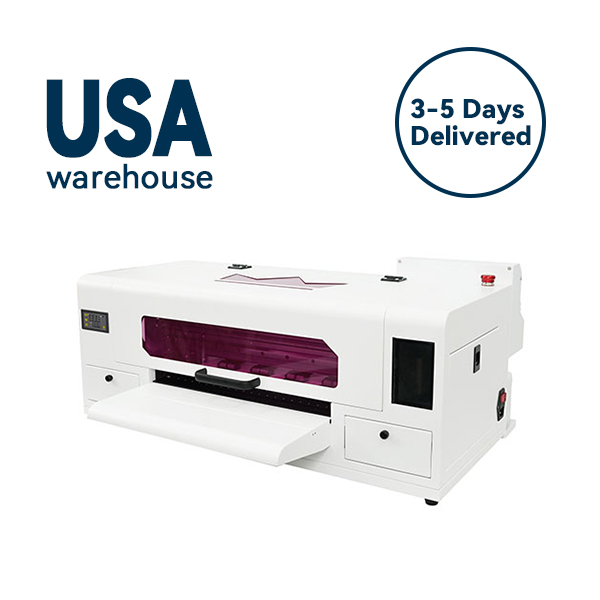
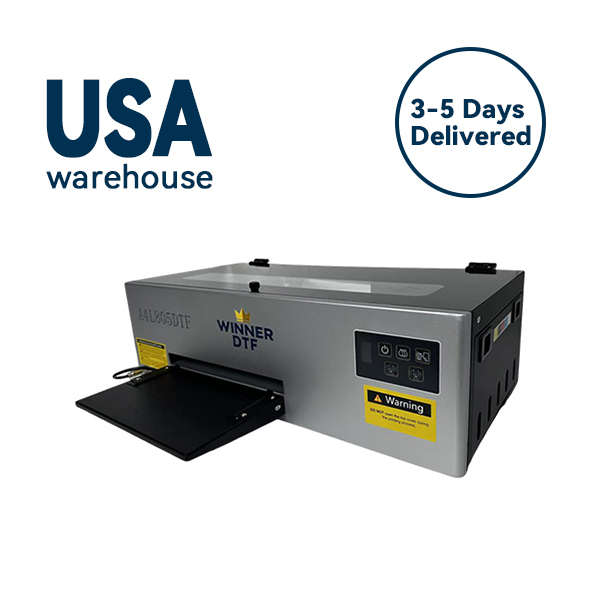
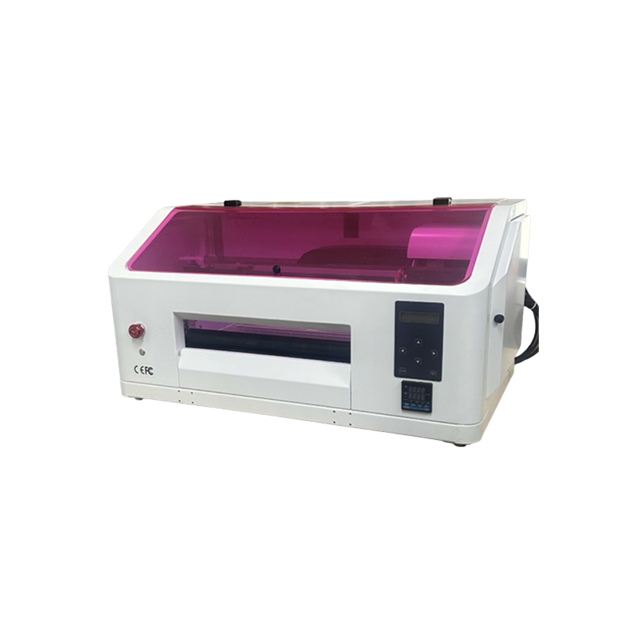
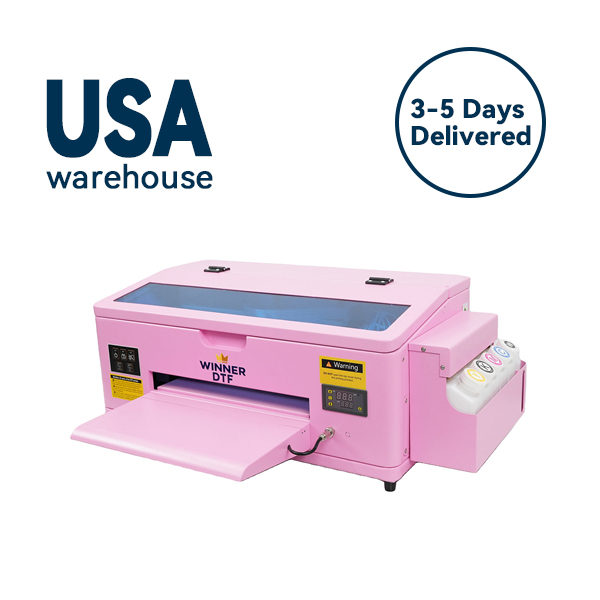
For Etsy sellers and small print shops, compact UV printers designed for DTF workflows are a great entry point. These units are often small-format (A3 or smaller) and are perfect for testing the market without a massive capital investment .
When looking at these, pay attention to the print head technology (like Epson DX5, DX7, or i3200), which affects speed and quality, and the ink configuration (ensuring it has white ink and varnish channels) .
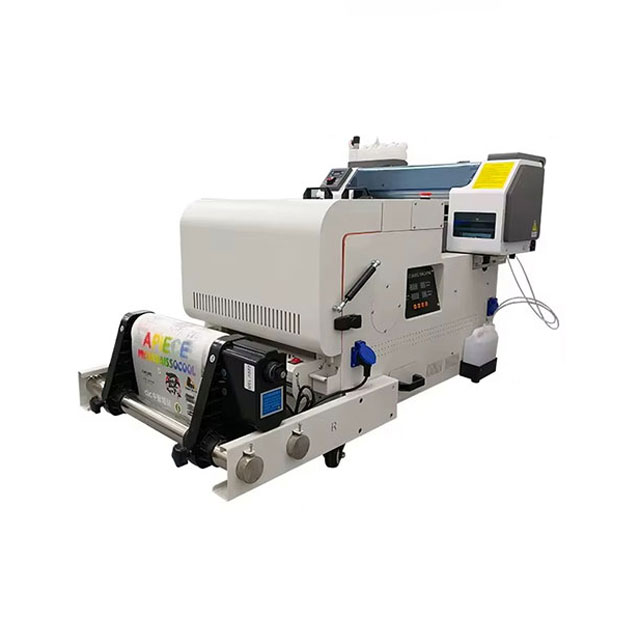
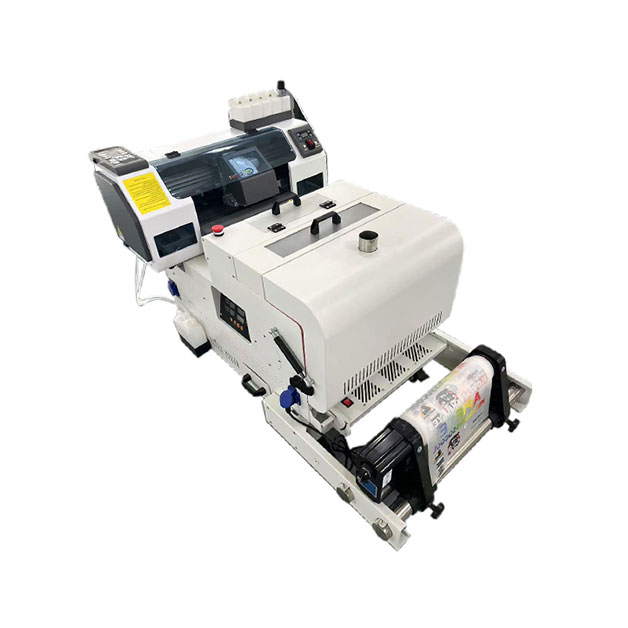
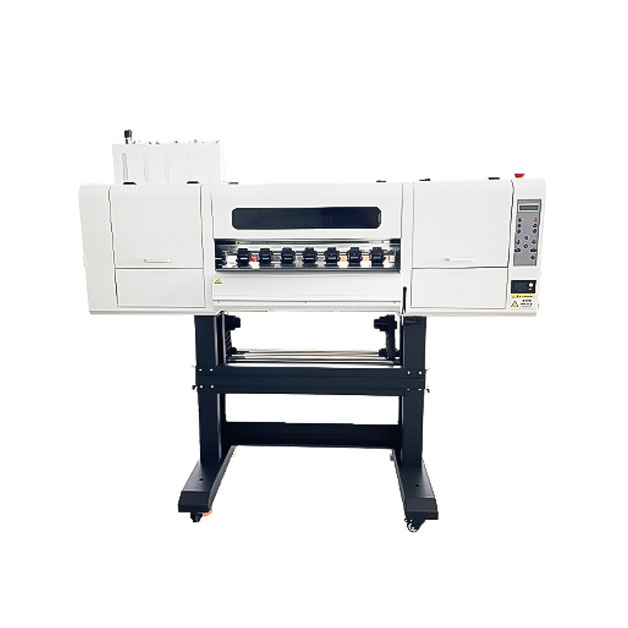
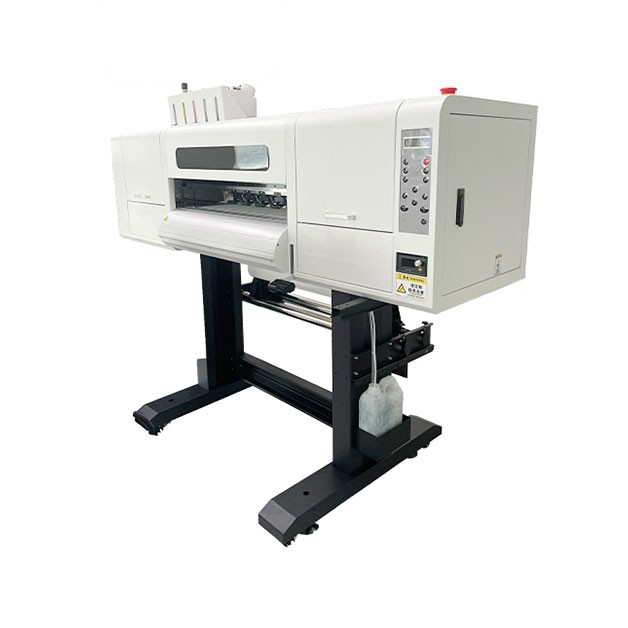
If you are looking to mass-produce thousands of transfers, or supply transfers to other businesses, you need a dedicated production system like the Mimaki UJV300DTF-75 . Released in late 2025, this is a roll-to-roll UV DTF printer designed for production environments. It features specialized silicon pinch rollers that prevent the adhesive film from sticking to the machine and a built-in lamination unit. This is for serious decorators looking to scale.
Getting started is easy, but mastering the application ensures customer satisfaction.
Since UV DTF creates a raised decal, consider how light will reflect off it. Utilizing the white ink layer is crucial when printing on clear film for dark substrates. If you skip the white underbase on a dark phone case, your design will look washed out . The clear varnish layer can also be used to create a matte finish if you want to avoid the high-gloss look.
Durability is measured by environmental exposure. UV DTF prints generally last 2 to 5 years, depending on whether the application is indoor or outdoor . The UV-cured ink is inherently resistant to fading from sunlight, and the adhesive is waterproof.
Can it go in the dishwasher? No. While waterproof, the high heat and pressure of a dishwasher will break down the adhesive. Hand washing is recommended to maximize lifespan, which can be several years with proper care .
Yes, but they are designed to be permanent. Removal usually requires heat (from a hairdryer) to soften the adhesive, allowing you to peel it off. Some sticky residue may remain, which can be cleaned with rubbing alcohol.
UV DTF printing represents a significant shift in how we approach hard-goods decoration. It democratizes the process, removing the need for expensive flatbed printers with complex vacuum tables and dangerous heat presses. It puts the power to create durable, vibrant, professional-grade decals into the hands of anyone with a clean workspace and a creative idea.
If your business revolves around textiles, stick to DTF. But if you want to tap into the lucrative market of personalized drinkware, tech accessories, luxury packaging, and promotional products, investing in UV DTF technology is one of the smartest moves you can make in 2026. It is fast, versatile, and the results speak for themselves.